Skip to content

Teamwork

Collaborative Reservoir Modelling

Let geologists, engineers and production specialists work on one reservoir model at once — with centralised review and built-in conflict resolution.

Collaboratively Work in the Same Project

Subsurface projects need reservoir engineers, geoscientists, production specialists and data analysts all contributing to one model – but traditional workflows force teams to work sequentially, passing files back and forth and creating version conflicts. tNavigator’s Teamwork lets multiple specialists work on the same project at the same time, each in their own dedicated working copy, focused on their own task.

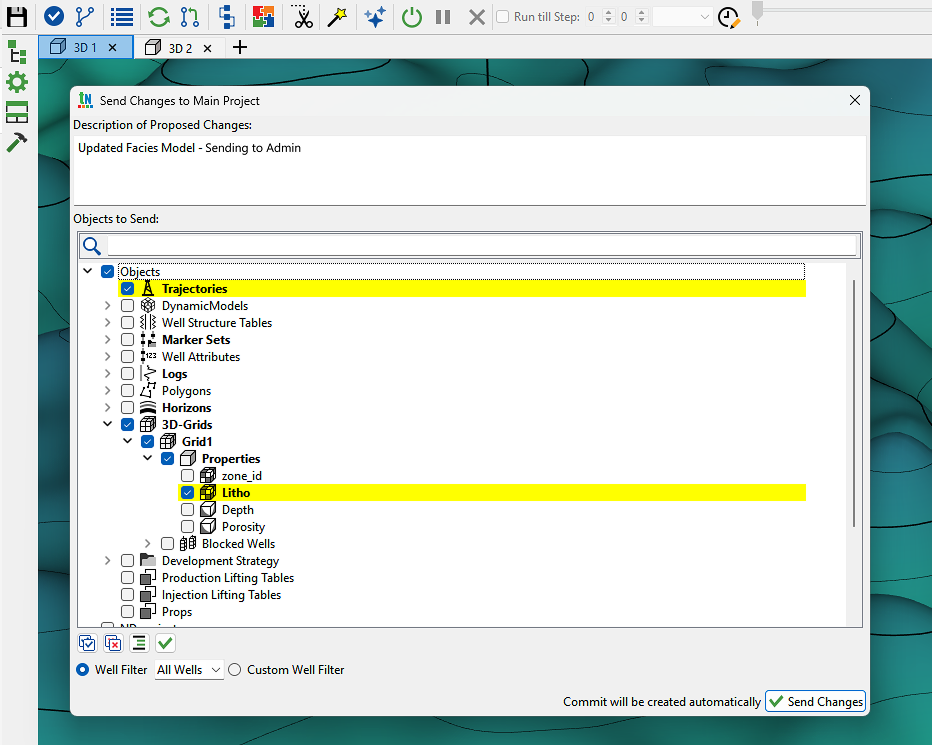
Once work is complete, contributors submit their updates to a central, administrator-managed project, where changes are reviewed, approved and consolidated – with built-in tools to resolve conflicts when two people have edited the same object. The result is parallel development of complex models, better coordination between disciplines, and a shorter path from first edit to an approved, up-to-date project.


Parallel, multi-discipline collaboration

Each user works in their own working copy of the project – in Geology Designer, Seismic, Model Designer, Mining Designer and more – while the administrator’s project holds the single, approved source of truth.

Centralised review with built-in conflict resolution

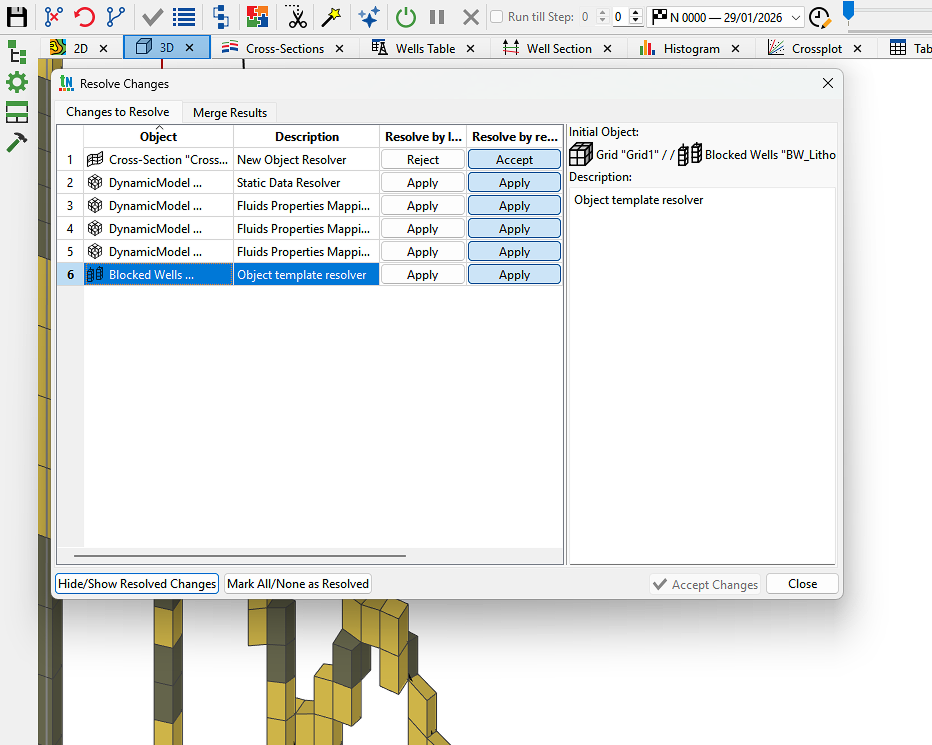
Submitted changes are reviewed and approved by an administrator before joining the master project, and the Resolve Changes dialog groups conflicting edits by object in a tree structure, so disagreements between contributors are easy to see and resolve.

Broad, growing object coverage

Teamwork covers the Seismic family of objects (2D/3D surveys, horizons, faults, wavelets), individual RP variants, well-dependent objects, user workflows and geometry object templates, with a dedicated tab for comparing changes to specific objects.


Also Included in Teamwork:

  • Teamwork projects open and operate as standard .snp projects – any project can be converted to a Teamwork project, and back again, at any time.
  • Data is stored on network drives, with access controlled using standard operating system tools.
  • Users can request deletion of objects in the administrator’s project, not just additions or edits.
  • Shortens the feedback cycle between disciplines and improves overall efficiency on complex, multi-team projects.