Skip to content

Uncertainty

Uncertainty Quantification & History Matching

Quantify uncertainty, automate history matching and optimise forecasts in one workflow – Assisted History Matching & Uncertainty for confident reservoir decisions.

Make Confident Decisions Under Uncertainty

The Uncertainty module helps reservoir teams quantify risk and calibrate models with confidence, combining assisted history matching, uncertainty quantification and forecast optimisation in one integrated workflow – without leaving the tNavigator platform.

Evaluate Risk, Calibrate Models, Optimise Forecasts

By integrating static and dynamic uncertainties across the modelling workflow, Uncertainty helps engineers evaluate risk, calibrate models against production history, and generate optimised development forecasts directly from live Model Designer and Geology Designer projects.


Differential Evolution & Simplex (Nelder-Mead)

Differential Evolution (DE) is a stochastic, population-based algorithm that evolves a set of model variants toward the objective function optimum, with Local Search and Global Search presets. The Simplex Method (Nelder-Mead algorithm) is a fast, gradient-free direct search well suited to smaller problems.
Particle Swarm Optimization

Particle Swarm Optimization (PSO) models a swarm of particles exploring the search space, each remembering its own best position and the swarm’s best position. Both a Classic and a more exploratory Flexi version (with standard, egoistic and highly social particle behaviours) are available.

AI-Assisted & External Optimisation

The Artificial Intelligence algorithm builds a neural-network proxy model during optimisation to cut the number of full simulation runs required. For teams with their own methods, the External option runs custom Python algorithms via the built-in tnavigator_ahm package, or calls SciPy’s Differential Evolution, Nelder-Mead and COBYLA implementations directly.


Multi-Objective Optimisation & Pareto Fronts

When objectives conflict — for example maximising oil recovery while minimising water production — Multi-Objective Differential Evolution (MODE) and Multi-Objective Particle Swarm Optimization (MOPSO) search for a balanced set of non-dominated solutions rather than a single answer, visualised as a Pareto front so teams can see the trade-offs and choose a development strategy deliberately.


Uncertainty supports a full range of calibration and risk-analysis workflows:

  • Uncertainty quantification – combine static and dynamic uncertainties with customisable dashboards and clustering analysis.
  • Assisted history matching – automate model calibration using experimental design, a full library of optimisation algorithms, sensitivity analysis and machine learning.
  • Forecast optimisation – test and rank development strategies using advanced algorithms and parallel simulation.
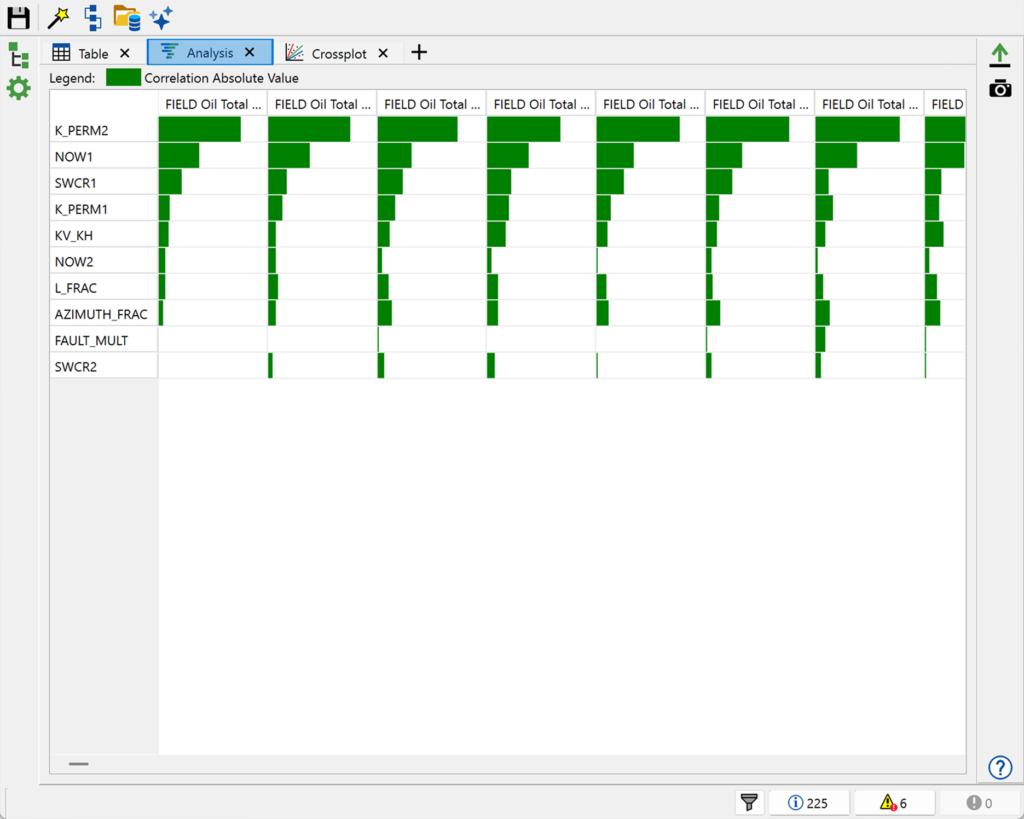
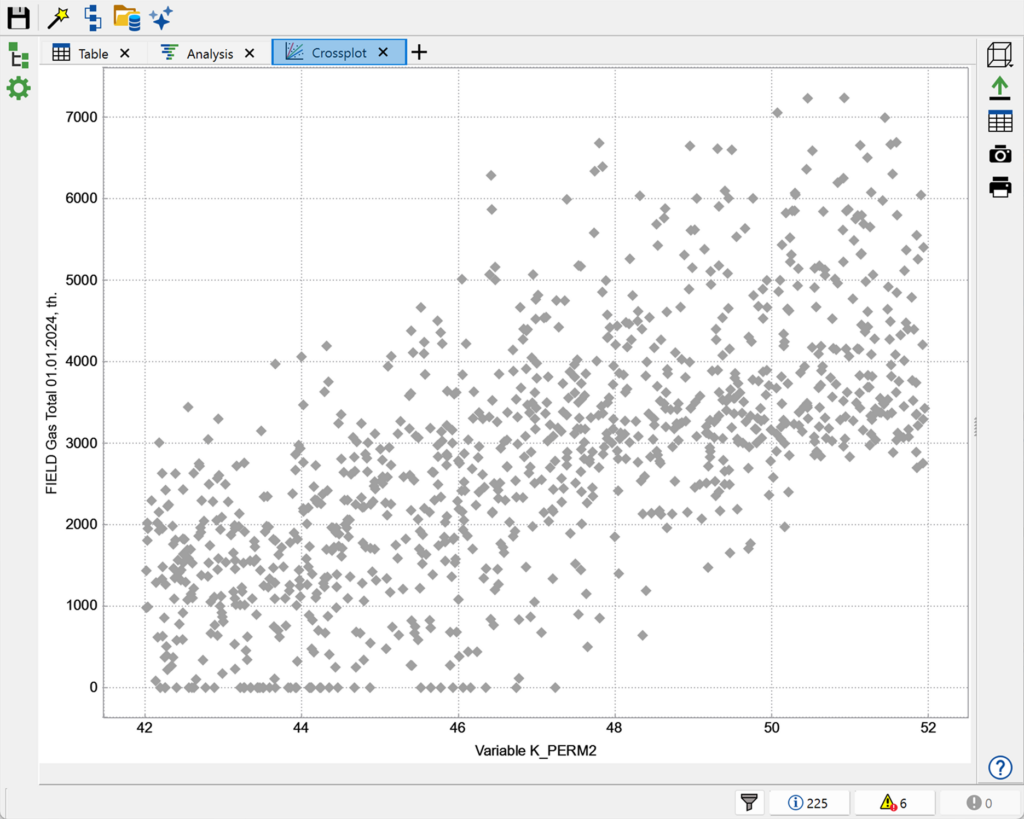
  • Sensitivity analysis – identify which model parameters most affect production and recovery outcomes using Tornado, Plackett-Burman, Box-Behnken and grouped-variable designs.
  • Multiple realisations – run and compare large ensembles of model variants in parallel across workstations and clusters.
  • Multi-objective optimisation – balance conflicting objectives with Multi-Objective Differential Evolution (MODE) or Multi-Objective Particle Swarm Optimization (MOPSO), visualised as a Pareto front.
  • Machine-learning-assisted proxy models – build Quadratic, Neural Network or LSTM proxy models to approximate simulation results and accelerate optimisation, complete with bootstrap-based uncertainty intervals.
  • High-dimensional history matching – history-match large, spatially correlated grid properties like permeability directly, using the Discrete Cosine Transform (DCT) algorithm instead of manually subdivided regions.
  • Model Designer & Geology Designer integration – define history-matching and uncertainty variables directly against static and dynamic model parameters.

Proxy Models & Machine Learning

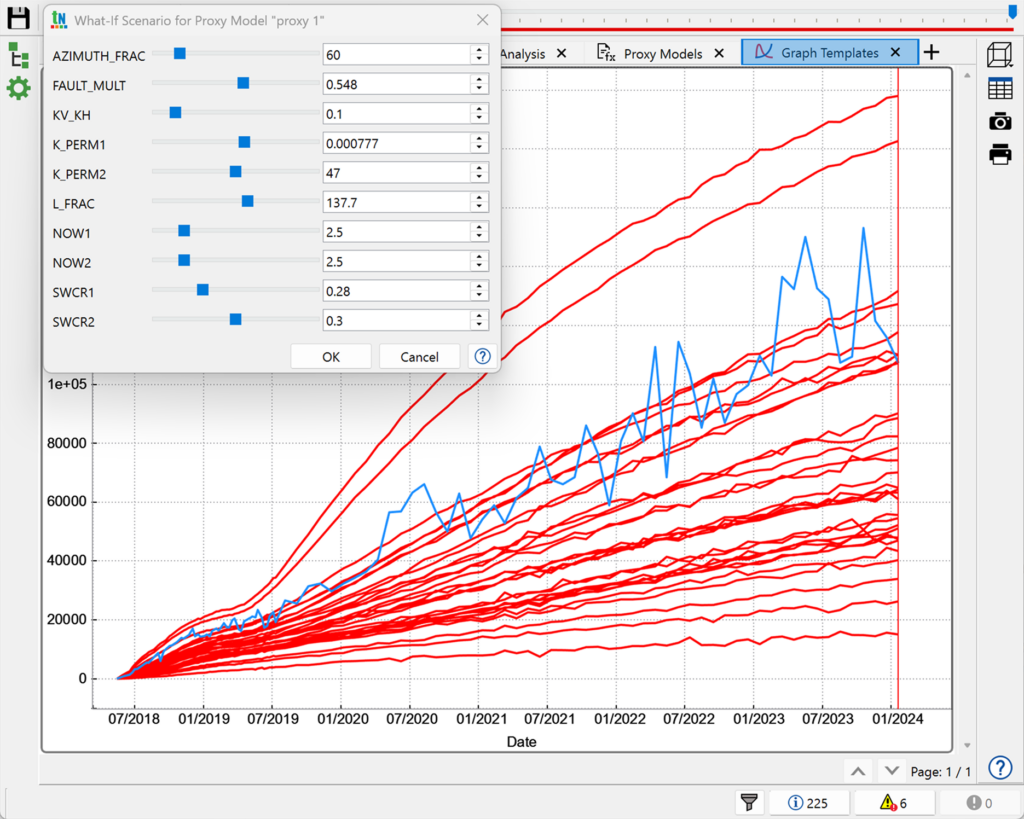
To speed up optimisation and uncertainty analysis on expensive-to-run models, Uncertainty can build fast approximations — proxy models — trained on completed simulation runs:

  • Quadratic Proxy – a fast polynomial approximation of the objective function, with automatic selection of the most correlated terms.
  • Neural Network Proxy – a Fully Connected Feedforward Neural Network trained on model variants, with configurable hidden layers, training algorithms (RProp, Incremental, Batch, QuickProp) and activation functions.
  • LSTM Neural Network Proxy – a Long Short-Term Memory (LSTM) recurrent neural network for predicting time-dependent production behaviour from a rolling window of previous timesteps.
  • Bootstrap prediction intervals – estimate confidence in proxy model predictions using bootstrap resampling, so optimisation results come with a sense of how reliable they are.

Purpose-Built for Large, Complex Models

Several features in Uncertainty exist specifically to handle the scale of real reservoir models:

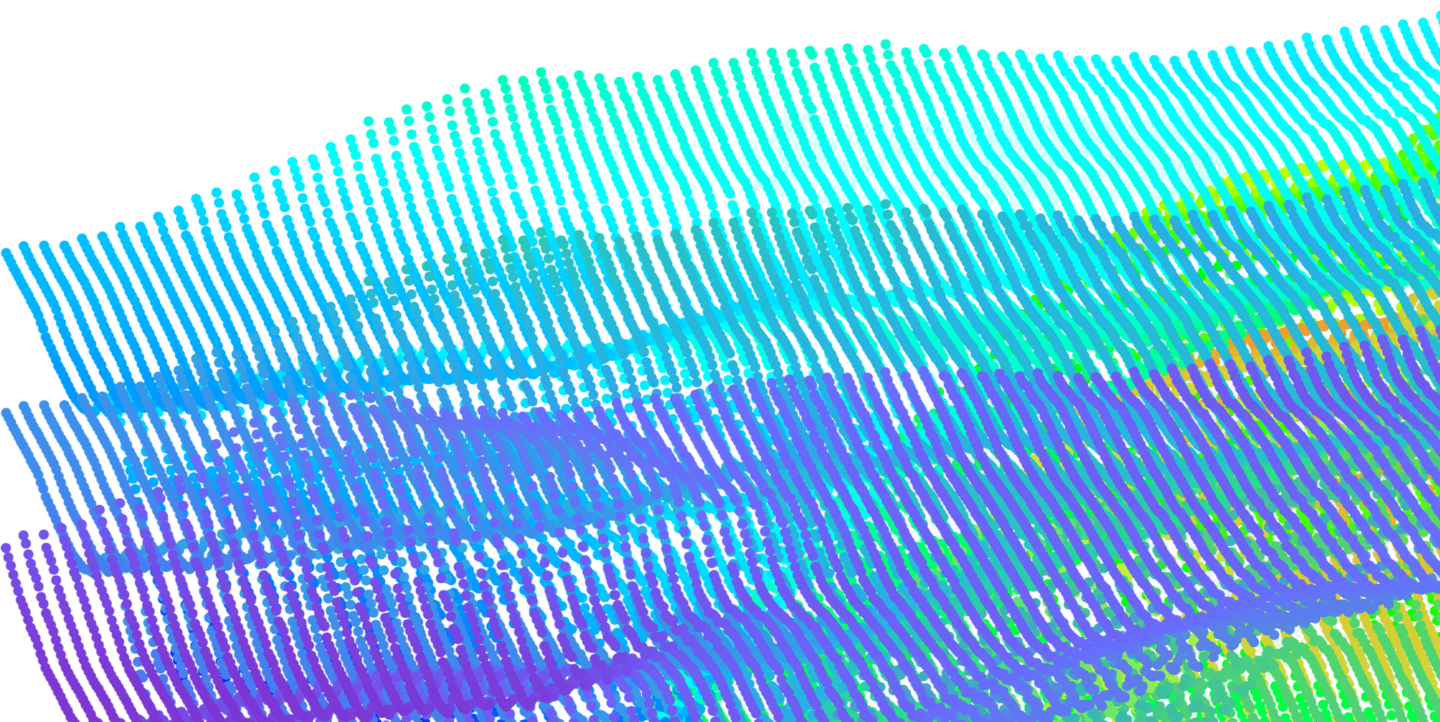
  • Discrete Cosine Transform (DCT) algorithm – history-match spatially correlated grid properties such as permeability directly – using the Discrete Cosine Transform to represent the property with a handful of multiplier variables, without subdividing the grid into arbitrary regions or violating its geological structure.
  • Assisted history matching under geological uncertainty – run a multivariant workflow that first screens geological realisations (via groupsets or clusterisation), then history-matches the dynamic variables of only the representative ones.
  • Building of probabilistic properties – build probabilistic (e.g. P10/P50/P90) 3D grid properties directly from a matched ensemble, to see which model regions are most sensitive to uncertainty.
  • Well placement optimisation – vary well pattern geometry – spacing, angles, offsets – as AHM variables to find an optimal development layout.

Assisted History Matching & Uncertainty is fully integrated within the tNavigator platform:

  • Define variables directly on Model Designer and Geology Designer projects, in both static and dynamic models.
  • Run multiple realisations in parallel across workstations and clusters.
  • Feed calibrated, optimised models into Simulation, Reservoir Performance and field development planning.